
The practice of Ashtanga Yoga is rooted in a unique method known as Mysore style, named after the small South Indian city where this tradition originates. Unlike most group fitness classes, where the instructor leads everyone through the same movements at the same time, the Mysore method emphasizes individualized instruction. The teacher works with each student one-on-one, meeting them exactly where they are in their practice. But there’s a catch: in order to participate, students are expected to memorize the sequence of poses as it is taught by their teacher.
For many, that’s an intimidating barrier. The idea of stepping into a Mysore room without a full grasp of the sequence can be nerve-wracking.
So, what do you do when memorization feels like a mountain to climb?
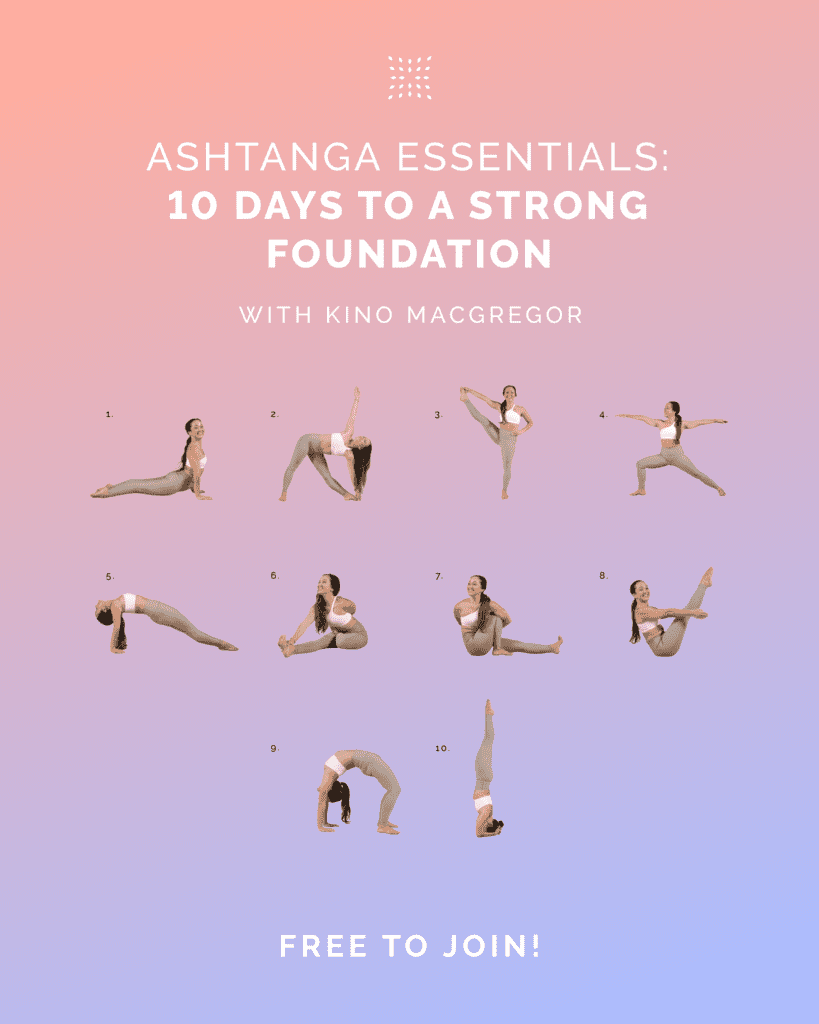
If you’ve ever studied for a test, the answer might feel obvious: make a reference card. You could even call it a cheat sheet.
My First Mysore-Style Ashtanga Yoga Class
I still remember walking into my first traditional Mysore-style class. I approached it like I was preparing for an exam. Back then, there were no official practice cards or laminated yoga cheat sheets. So I grabbed a notecard, drew little stick figures, and scribbled some notes. I was nervous, afraid someone might notice and call me out for bringing it into the room. But here’s what surprised me: I didn’t even need the notes. The act of writing down the sequence helped me memorize it. That effort alone gave me enough confidence to move through the practice without peeking once.
To be fair, that wasn’t my very first exposure to Ashtanga Yoga. I’d taken a few Led Primary Series classes and practiced informally with friends, so I was already somewhat familiar with the sequence. But what I really needed was the confidence to do it on my own, in a room full of other practitioners. That’s where the cheat sheet helped. It was a kind of security blanket that empowered me to take that leap.
I never told the teacher I had notes tucked under my mat. Maybe they noticed, maybe they didn’t. Either way, I never ended up needing them. After that first day, I never brought them again.
Can Beginners Use a Practice Sheet in Mysore Class?
Now let me say this clearly: I wouldn’t recommend trying to teach yourself the Ashtanga sequence from a practice card if you’ve never practiced it before. In that case, it’s far better to start with a beginner-level class or a guided Led class to become familiar with the poses and transitions. But if you already know the postures and just need help remembering the order, a cheat sheet can be a wonderful tool to ease the fear of forgetting.
Every series I’ve learned since then, up to Fifth Series, has been taught to me pose by pose in the traditional Mysore style. The classical method is based on the teacher assigning each posture individually and observing the student’s readiness before moving on. That personal transmission is the heart of this practice.
Some traditional teachers will never allow a practice sheet in the room under any circumstances. I understand their point of view. After all, the classical method is meant to be passed down directly from teacher to student, and if a student is showing up consistently, there’s usually no need for the notes. The teacher will be there every step of the way.
But I also know that many students are just curious. They want to experience a taste of Mysore-style yoga, maybe for the first time. I travel and teach often, and one of the most frequent questions I get is: Is it okay to bring a practice card into the Mysore room?
My answer is always yes, especially if it’s your first time.
Why Memorizing the Ashtanga Yoga Sequence Matters
If you continue practicing with me over the long term, I’ll gently encourage you to memorize the sequence and eventually let go of the cheat sheet. There are real benefits to learning the sequence by heart. Once that mental hurdle is crossed, the practice moves deeper. You shift out of your thinking mind and into a more meditative, internal space.
Your breath slows. Your awareness expands. Your attention turns inward toward the subtle body. In that sacred inwardness, the true magic of Ashtanga Yoga begins to unfold.
The process of memorization is not simply about remembering which posture comes next. It is part of developing an independent relationship with the practice, allowing the sequence to become familiar enough that your attention can move beyond the mechanics of each movement and toward the deeper experience of breath, awareness, and concentration.
Starting Your Mysore-Style Yoga Practice
So, if you’re considering joining a Mysore-style class but feel hesitant about memorization, bring your notes, at least if you’re practicing with me. We all start somewhere. Sometimes, just having that little piece of paper tucked under your mat is enough to remind you that you’ve got this.
As your confidence grows, you may discover that the practice sheet you once relied on is no longer necessary. Through repetition, patience, and the guidance of a teacher, the sequence gradually becomes something you know from within, opening the door to a deeper and more meditative experience of Ashtanga Yoga.
Continue Your Mysore-Style Ashtanga Practice on Omstars
Whether you’re new to Mysore-style Ashtanga Yoga or looking to deepen an established practice, Omstars offers guided classes, traditional Ashtanga sequences, and teachings from Kino MacGregor and experienced yoga teachers to support your learning. Explore the practice at your own pace, build familiarity with the sequence, and develop the confidence to return to your mat with greater independence.
Help us continue sharing free yoga teachings and resources with a donation!