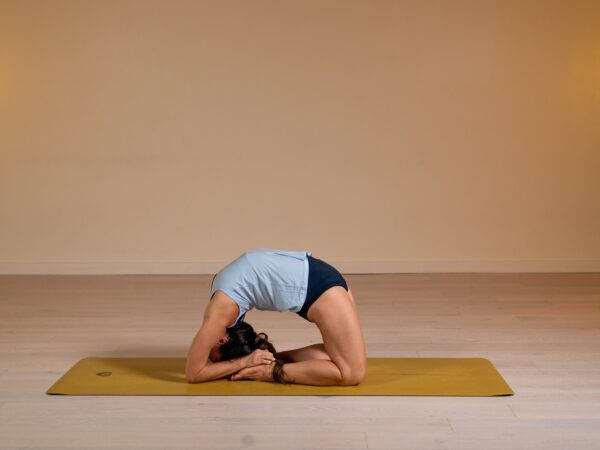

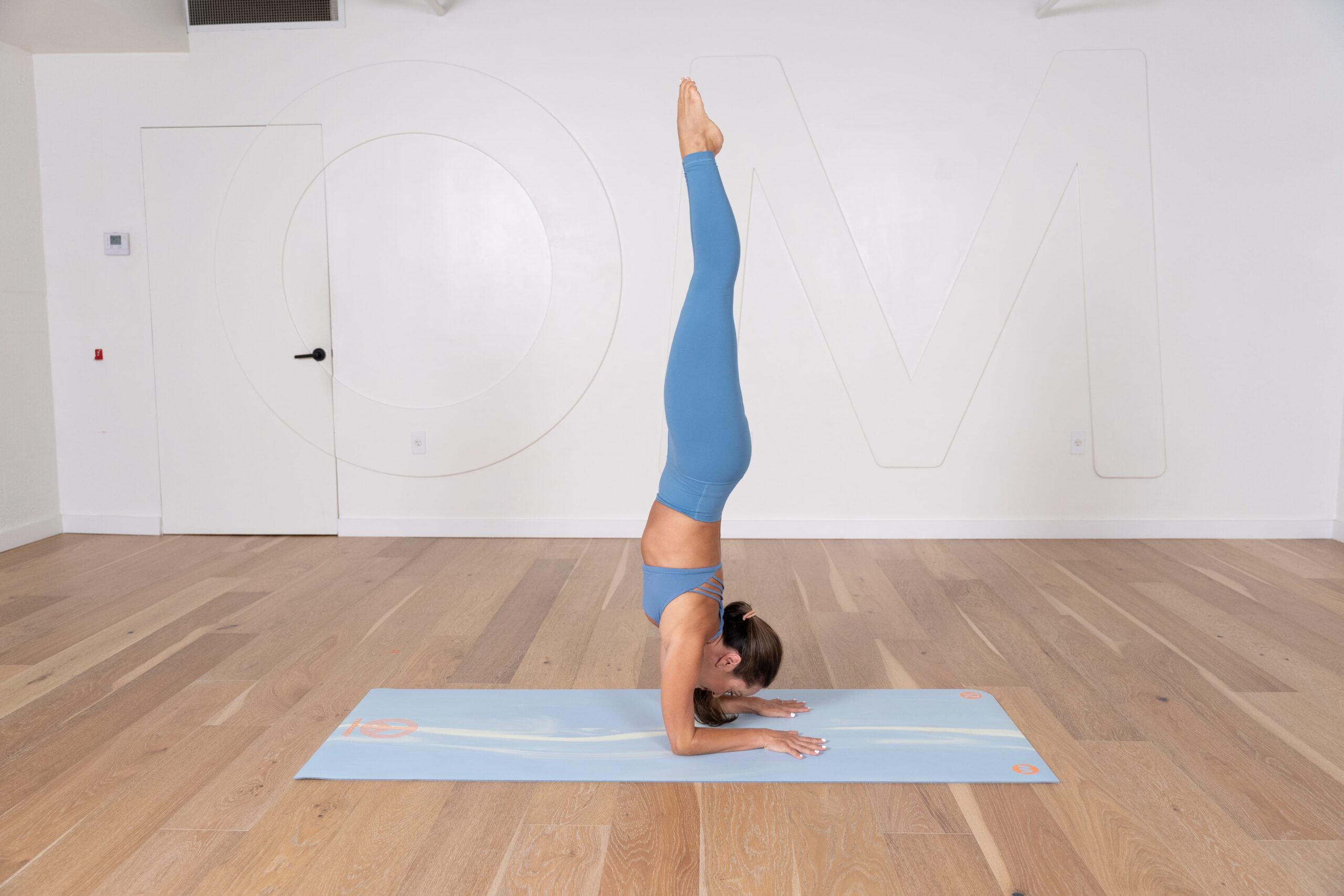
It took me two years of failure to finally stand steady in Pinchamayurasana. I fell more times than I can count, and each attempt revealed not only the physical challenge of the posture but the landscape of my own mind. Frustration arose, then irritation, then discouragement, disappointment, and at times a quiet sense of hopelessness that lingered beneath the surface. There were moments when comparison crept in, when I measured myself against others and felt the sting of not being where I thought I should be. Yet something in the practice asked me to stay, to keep returning, to meet each fall not as an end but as part of the path itself.
Over time, the most important shift did not happen in the shape of the pose but in the way I related to it. The grasping began to soften, and with it, the subtle violence of self-judgment started to dissolve. The Yoga Sūtra reminds us that suffering arises when we mistake the transient for the essential, when we cling to outcomes as a measure of who we are. In this way, Pinchamayurasana became a mirror for avidyā, a misperception that equates success with arrival and failure with lack. As that veil slowly lifted, I began to experience the practice differently. The urgency to succeed gave way to a quieter steadiness, and I found myself less disturbed by falling, less entangled in the story of what each attempt meant.
It was only when I was no longer bothered by my own failure that the pose began to reveal itself. When I became at ease in my own skin, the body found a different intelligence, one that did not come from force or will alone but from listening. In that space, practice became an expression of santosha, a quiet contentment that does not depend on external validation. This contentment is not complacency, but rather a deep acceptance that creates the conditions for genuine transformation. I had to make peace with where I was before anything could change, and in doing so, I discovered that the very state I had been seeking through the pose was already available within the act of practice itself.
At the same time, it would be incomplete to speak only of surrender without honoring the discipline that supports it. Good technique, thoughtful alignment, and intelligent drills are invaluable, and they offer pathways that can illuminate the mechanics of the body and refine our approach. They help us understand how to organize strength, how to stabilize the shoulders, how to integrate the core, and how to move with greater efficiency and safety. Yet even the most precise instruction cannot replace the simple, steady act of showing up. There is no shortcut that bypasses the lived experience of repetition, of trial and error, of learning through the body over time. The Bhagavad Gītā speaks of abhyāsa, sustained practice, as a means of steadying the mind, and it is this consistent effort that gradually transforms both our capacity and our perception.
We cannot rush the learning process, because yoga is not merely a technique to be mastered but a relationship to be cultivated. The body unfolds according to its own rhythms, and the deeper layers of understanding arise only through patience and presence. What appears as delay or stagnation is often an unseen integration, a quiet reorganization beneath the surface that prepares the ground for change. When we try to force progress, we reinforce the very patterns of grasping that the practice seeks to dissolve. When we allow time to do its work, we begin to align with a more natural unfolding, one that is both disciplined and receptive.
This is the lesson I carry with me, not only in Pinchamayurasana but in every aspect of practice and life. The posture was never just about balancing on the forearms. It was about learning how to meet myself, again and again, with honesty, patience, and compassion. In the end, the real achievement was not the pose itself, but the quiet transformation that made the pose possible.
If you are working on Pinchamayurasana, these technical elements can offer support along the way, not as rigid rules to perfect, but as skillful means, what the tradition might call upāya, methods that help guide the body toward a more integrated experience of balance and ease.
Do not let the idea of a perfect shape prevent you from finding your way into the pose. Many of the images we see suggest a straight, vertical line, but that is rarely where anyone begins. In the early stages, the body is learning how to organize itself in space, and that often includes a slight arch or what some might call a banana shape. Rather than resisting this, allow yourself to explore any point of balance you can find. In the Yoga Sūtra, practice is described as something that becomes steady over a long period of time, approached with sincerity and without interruption. This steadiness does not arise from forcing an ideal, but from meeting the body where it is and allowing it to evolve.
Let the gaze remain steady between the hands, with a subtle forward direction that helps awaken the intelligence of the shoulders. This small shift in focus can make a profound difference, as it invites the upper body to participate more fully in the work of stabilization. The shoulders, particularly the muscles of the rotator cuff, need to be active and engaged, holding the head of the arm bone securely in place. A slight retraction of the shoulders can offer a sense of containment and strength, especially in the beginning, when both mobility and stability are still developing. While more advanced practitioners may explore deeper protraction and extension, there is no need to rush into a demand that the body is not yet ready to meet. Yoga asks for discernment, for viveka, the capacity to recognize what is appropriate in each moment.
When entering the pose, the single leg approach can be a powerful way to build awareness. Instead of trying to arrive immediately in a fully stacked position, allow one leg to lead and the other to follow, giving yourself permission to move slightly past vertical as you search for the balance point. There is a moment, subtle and fleeting, where the weight shifts just enough forward that the body begins to feel light, almost suspended. This is not something that can be forced, but something that is recognized through repeated attempts.
Patience becomes especially important when bringing the second leg into the pose. There is often a strong impulse to rush, to complete the shape as quickly as possible, but this urgency can pull you out of the very balance you are trying to establish. Instead, find stability in the split leg position first, allowing the core to engage and the pelvis to lift. From there, the legs can draw together slowly and with control, guided by the intelligence of the center rather than the momentum of habit.
Throughout the entire process, keep the core awake and the pelvis subtly lifting, as though the movement originates not from the extremities but from the deep center of the body. When you think about entering the pose, let the pelvis travel slightly forward, allowing the line of gravity to support rather than oppose you. In this way, the pose becomes less about pushing up and more about aligning with a point of balance that is already present.
And yet, even with all of these refinements, it is important to remember that technique alone is not the practice. Alignment, drills, and detailed instruction can illuminate the path, but they cannot walk it for you. There is no substitute for the lived experience of repetition, for the countless attempts that slowly teach the body what cannot be understood intellectually. The practice asks for abhyāsa, a steady and devoted effort over time, and for vairāgya, a release of attachment to immediate results. Together, these form the foundation upon which real progress is built.
You cannot rush your way into this pose, just as you cannot rush your way into understanding yourself. The process unfolds in its own time, shaped by patience, consistency, and a willingness to remain present even when the outcome is uncertain. What appears to be slow progress is often the deepest kind of learning, one that integrates not only strength and technique, but humility, resilience, and trust.
Deepen your practice of Pinchamayurasana in this guided class with Kino on Omstars. Explore step-by-step instruction, strength-building drills, and alignment-focused tutorials designed to help you build stability, confidence, and ease in your inversion practice. Practice with Kino and a global community of students committed to steady, mindful progress on the path.