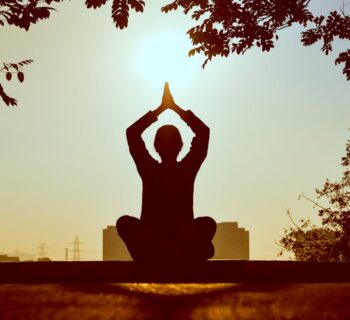

Sitting on the floor is an unfamiliar act for many of us. Raised in a culture shaped by chairs, cars, and elevated furniture, our daily movements rarely invite us all the way down to the ground. We stand, we sit, we step in and out of vehicles, but we seldom linger at floor level. Over time, the floor becomes foreign territory.
Yet the ability to sit comfortably on the ground is not a novelty or an aesthetic achievement. It is a quiet measure of mobility, adaptability, and ease in the hips. It reflects a relationship with the body that remains fluid rather than brittle. As the years pass, this relationship matters more than we often realize. The simple capacity to descend to the floor and return without strain shapes independence, confidence, and quality of life.
Yoga as the Practice of Sitting
Yoga was never separate from these practical realities. Long before yoga became associated with complex postures or visible displays of flexibility, it was rooted in the need to sit.
The Sanskrit word āsana did not originally describe a repertoire of shapes. It meant a seat, a stable and comfortable place from which inner work could unfold. Ritual, study, and meditation required stillness free from pain and agitation. If the body was strained, the mind could not settle into clarity or sattva. Postures that opened the hips and softened resistance in the lower body were essential not for display, but for preparation.
Understanding Baddha Konasana
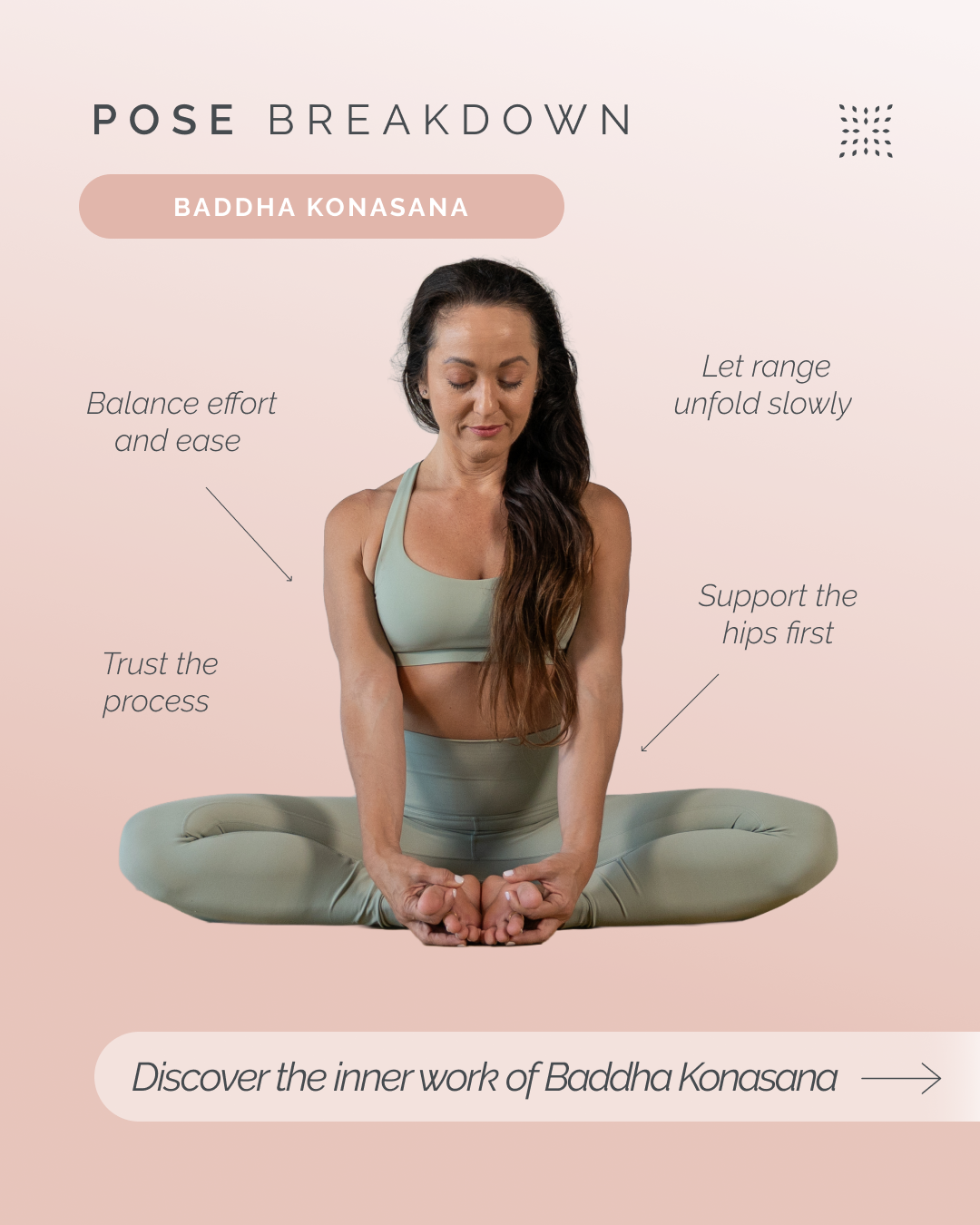
Baddha Konasana sits squarely within this lineage. The name itself tells a story. Baddha means bound or restrained, while kona refers to an angle or corner. Āsana, once again, is the seat. Bound Angle Pose is not bound in a restrictive sense, but gathered, contained, and held together with intention.
The soles of the feet meet, the legs fold inward, and the body draws toward the center. The hips soften where there is often guarding. In many Western studios, this posture is affectionately called Butterfly or Cobbler’s Pose. Butterfly evokes lightness and movement, the gentle fluttering of the knees. Cobbler’s Pose points toward an earthy image of someone seated low to the ground, working patiently with their hands. Both names hold partial truths. The Sanskrit reminds us that this is ultimately a posture of integration.
Variations and the Language of the Spine
Baddha Konasana reveals itself through subtle variations of the spine and pelvis.
With an upright, neutral spine, the posture expresses readiness. The natural curves of the back are honored, the chest lifts without rigidity, and the hips externally rotate as the inner thighs gradually release. This version cultivates alert ease and mirrors the quality needed for seated meditation.
When the torso inclines forward from the hip joints, the posture becomes an exploration of hinge and depth. The movement originates in the pelvis rather than the lower back, allowing the hips to open while the spine remains long and supported. This variation teaches discernment, the difference between yielding and collapsing.
When the spine rounds and the body folds inward, the posture shifts again. Containment deepens. The back releases, the abdomen softens, and the body turns toward introspection. A reclining variation extends this quality further, removing the work of gravity and inviting the nervous system into rest. Each expression has value. None is superior. Each meets the practitioner where they are.
Tradition, Technique, and Modern Insight
Across yoga traditions, Baddha Konasana adapts to different aims. In Ashtanga, it appears as a structured sequence of spinal actions that balance effort and release. In Iyengar Yoga, the posture is often supported with props to refine alignment and explore longer holds safely. In vinyasa-based practices, it may flow dynamically, emphasizing breath-led movement. In therapeutic settings, it becomes a tool for restoring function with patience and respect for individual anatomy.
Modern movement science echoes these traditional insights. Maintaining hip range of motion becomes increasingly important with age. Baddha Konasana can be practiced passively, allowing time and gravity to encourage release, or dynamically, with gentle engagement that teaches the nervous system it is safe to open. Sustainable flexibility arises from the dialogue between effort and ease, strength and surrender.
Practicing with Discernment
As with any posture, discernment matters. Baddha Konasana may not be appropriate for acute hip or knee injuries, and sensation should remain spacious rather than forceful. The pose asks for patience. It unfolds slowly, often over months or years, revealing layers of habit stored deep in the hips. Rushing rarely leads to freedom. Listening does.
Baddha Konasana in the 30 Day Flexibility Journey
This is why Baddha Konasana holds a meaningful place in the 30 Day Flexibility Journey. Flexibility here is not a race toward deeper shapes, but a cultivation of trust in the body’s capacity to change. Day by day, the practice invites you to rebuild a relationship with the floor, to remember how it feels to sit, to linger, and to breathe without urgency.
The posture becomes less about how far the knees descend and more about how the breath moves, how the spine organizes itself, and how the mind responds to stillness.
Returning to the Floor
In the end, we return to where we began. The floor is no longer foreign. Sitting becomes familiar again, even comforting. Baddha Konasana reminds us that yoga is not about transcending the body, but inhabiting it fully. When the hips soften and the seat becomes steady, the body offers itself as a foundation rather than an obstacle. From that foundation, inner work unfolds with clarity and calm, just as it has for practitioners across generations.
If you’re ready to explore this kind of steady, sustainable flexibility in your own body, Baddha Konasana is one of the key postures woven into the 30 Day Flexibility Journey on Omstars. The challenge is designed to help you rebuild trust in your hips, your range of motion, and your capacity to change without force. With just 20 minutes a day, you’ll move progressively through postures like this one, learning how flexibility develops through patience, consistency, and awareness. The journey offers a supportive structure to practice daily, deepen understanding, and experience how small, intentional efforts can create lasting shifts in both body and mind.